
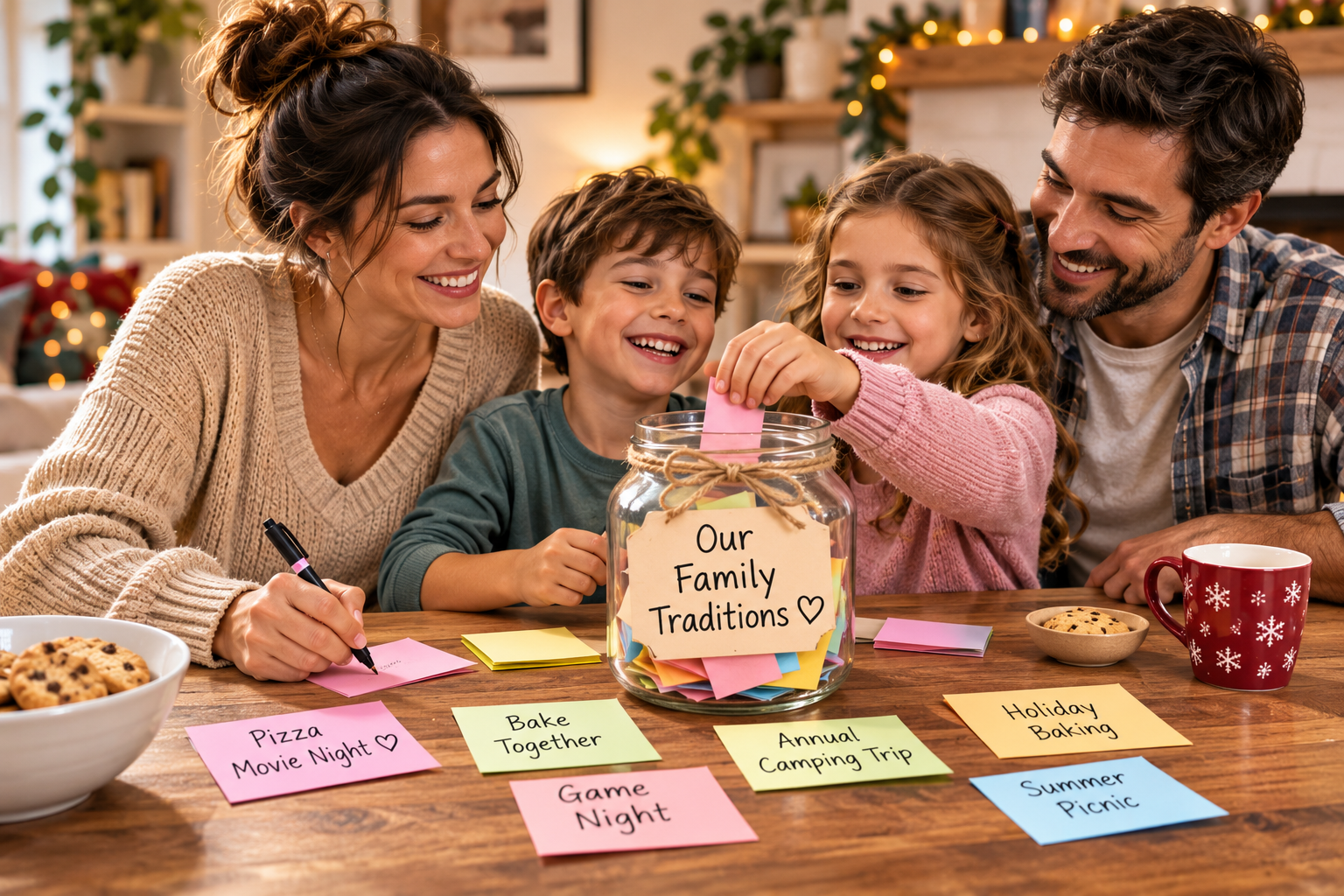
Some of the strongest childhood memories do not come from expensive vacations, elaborate birthday parties, or perfectly planned events. They often come from simple things that happen again and again: Saturday morning pancakes, a special bedtime story, decorating the house together, visiting the same park every summer, or having a particular meal on someone’s birthday.
These repeated experiences become family traditions. They give children something familiar to look forward to and can help create a sense of belonging. For moms, family traditions can also provide an opportunity to slow down and create meaningful moments without adding another complicated responsibility to an already busy schedule.
Family traditions are becoming especially popular as parents look for ways to create more meaningful childhood experiences. Pinterest’s 2026 Parenting Trend Report found that searches for “family traditions ideas” increased 200% year over year, reflecting a broader interest in creating memorable, real-world family experiences.
The good news is that a family tradition does not need to be expensive, elaborate, or Instagram-worthy. The traditions children remember most may be the ones that feel personal, predictable, and genuinely connected to their family.
What Makes Something a Family Tradition?
 A family tradition is more than something you do once. It is an activity, ritual, celebration, or habit that your family repeats and begins to associate with being together.
Some traditions happen every day. Others happen weekly, monthly, or once a year. A bedtime story can become a nightly tradition. Friday pizza night can happen every week. A family camping trip might happen every summer. Decorating the Christmas tree together might happen once a year.
The activity itself is not necessarily what makes the tradition meaningful. The repetition and emotional connection are what give it significance.
The American Academy of Pediatrics’ HealthyChildren.org explains that regular family rituals and shared activities can help strengthen family bonds and create opportunities for communication and connection.
Why Children Benefit From Family Traditions
Children often find comfort in knowing what to expect. A familiar tradition creates a predictable experience that they can anticipate and enjoy.
For example, a child may know that every Friday evening the family eats pizza and plays a board game. Even if the week was difficult, that familiar event provides something positive to look forward to.
Traditions can also give children a stronger sense of belonging. They become part of something that feels unique to their family. Over time, children may begin to describe these traditions as part of “what our family does.”
That sense of identity can become especially meaningful as children grow older and become more independent.
Keep Traditions Simple
One of the biggest mistakes parents can make is turning family traditions into another source of pressure. A tradition does not have to involve elaborate decorations, expensive activities, or hours of preparation.
In fact, simpler traditions may be easier to maintain because they can become part of everyday family life.
Try ideas such as:
- Saturday morning pancakes
- Friday family movie night
- A monthly family breakfast outing
- Reading a special book every holiday season
- Taking a family walk after Sunday dinner
- Making homemade pizza together
- Having a birthday breakfast tradition
- Writing notes to each other on the first day of school
- Taking an annual family photograph in the same location
- Choosing one special activity for the first weekend of summer
The simpler the tradition, the easier it may be to repeat year after year.
Let Your Children Help Create the Tradition
Family traditions become more meaningful when children have some ownership over them. Instead of deciding everything yourself, ask your children what they would like your family to do regularly.
A young child might suggest a weekly baking activity. An older child might want a monthly family game night. A teenager might enjoy choosing a restaurant for a special family outing.
Giving children a voice helps them feel like active participants rather than simply recipients of a family schedule.
This can also be an excellent opportunity to learn more about your children’s interests. Their ideas may surprise you.
Create Traditions Around Ordinary Days
You do not need to wait for holidays to create family traditions. Ordinary days can become meaningful too.
Maybe Wednesday becomes “family breakfast for dinner” night. Perhaps the first Saturday of every month is reserved for exploring a new local park. You could make Sunday evening a time when everyone chooses a favorite song and shares something about their week.
These ordinary rituals can become some of the most anticipated parts of family life.
They also tend to be easier to maintain than large annual events because they require fewer resources and less planning.
Use Food to Create Family Traditions
Food is naturally connected to memory. Certain smells, recipes, and meals can remind people of childhood long after they grow up.
Consider creating a family recipe tradition. You might make the same breakfast on birthdays, bake cookies together every December, prepare a favorite meal on the first day of school, or let each family member choose dinner on their birthday.
Children can participate in age-appropriate ways by washing produce, stirring ingredients, setting the table, or helping choose recipes.
The purpose is not to create a perfect meal. It is to create an experience that your family can repeat and associate with togetherness.
Create Outdoor Traditions
Family traditions do not have to happen inside the house. Outdoor rituals can provide opportunities for movement, exploration, and shared experiences.
Your family might take the same nature walk every season, visit a favorite park on the first weekend of spring, plant something together every year, or have a yearly backyard picnic.
Outdoor traditions can also evolve as children grow. A simple neighborhood walk when children are young might eventually become a family hike or camping trip when they are older.
The tradition changes, but the underlying idea of spending time together remains.
Make Holidays More Personal
 Holidays can become overwhelming when parents feel pressure to recreate everything they see online. Instead of trying to make every celebration elaborate, choose a few traditions that genuinely matter to your family.
Maybe your family makes a special breakfast on a holiday morning. Perhaps everyone chooses one decoration for the tree. You might have a family movie, take an evening walk to look at lights, or write down favorite memories from the year.
Personal traditions can make holidays feel more meaningful without requiring a large budget or complicated schedule.
Social media can make it easy to believe that other families have more exciting traditions. One family appears to take elaborate vacations every year. Another creates beautiful holiday celebrations. Someone else seems to have a perfectly organized family activity every weekend.
Your family does not need to compete with any of them.
A tradition is valuable because it means something to your family, not because it looks impressive to other people. A child may remember sitting at the kitchen table eating pancakes with mom far more fondly than an expensive activity that happened once.
Choosing meaningful traditions can also reduce the pressure that many moms already feel around creating the “perfect” childhood.
Make Traditions Flexible
Life changes. Children grow. Parents change jobs. Families move. Schedules become busier. A tradition that worked when your children were toddlers may no longer work when they are teenagers.
That does not mean the tradition failed.
Allow your traditions to evolve. A weekly bedtime story might eventually become a weekly family discussion. A Saturday morning playground trip might eventually become a Saturday morning coffee-and-walk tradition with older children.
The goal is connection, not rigid repetition.
Turn Family Responsibilities Into Traditions
Not every tradition needs to be purely recreational. Everyday responsibilities can become meaningful family rituals too.
You might have a Sunday family cleanup where everyone works together while listening to music. You could make grocery shopping a regular opportunity for children to help choose ingredients. You might have a weekly family planning conversation where everyone shares what is happening during the next few days.
These activities teach children responsibility while creating opportunities for connection.
The American Academy of Pediatrics notes that age-appropriate responsibilities can help children develop confidence, cooperation, and a sense of contribution within the family. HealthyChildren.org’s guidance on chores and responsibility offers additional ideas for involving children in household life. Create One-on-One Traditions With Each Child
Family traditions do not always need to involve everyone at the same time. One-on-one rituals can help each child feel individually valued.
Maybe you have a monthly breakfast date with one child, a weekly bedtime conversation with another, or a special activity you do together based on their interests.
These small rituals can be especially meaningful in larger families where children may compete for attention.
The activity does not need to be expensive. A walk, reading together, making a snack, playing a game, or talking in the car can become a meaningful tradition.
Build Traditions Around Milestones
Children experience many milestones as they grow. Family traditions can help mark these moments.
You could write a letter to your child every year on their birthday. Take the same photograph on the first day of each school year. Create a special family breakfast before an important event. Ask your child the same set of questions every birthday and save their answers.
These traditions can become valuable records of how your children change over time.
Use Traditions to Stay Connected When Life Gets Busy
Busy schedules can make family connection difficult. Work, school, activities, appointments, and other responsibilities can quickly fill the calendar.
A recurring tradition creates a protected opportunity to reconnect. It does not need to take hours.
Even fifteen minutes of a predictable family ritual can be meaningful. The American Academy of Pediatrics emphasizes the importance of safe, stable, nurturing relationships and predictable routines in supporting children’s emotional and relational development.
That means a small tradition can be valuable even when your family cannot create long blocks of free time.
Do Not Forget Mom
Family traditions should bring joy to the whole family, including mom. If a tradition requires hours of preparation every week and leaves you exhausted, it may not be sustainable.
Choose traditions that you genuinely enjoy too. If you love baking, make baking part of your family’s rituals. If you enjoy nature, create an outdoor tradition. If you prefer quiet evenings, choose reading or game nights.
Your family traditions should not become another list of responsibilities that only you manage.
For more ideas about protecting your own time while parenting, visit How to Juggle Parenting and Personal Time Without Feeling Guilty.
What If Your Family Does Not Have Many Traditions?
It is never too late to start. Your family does not need decades of history behind a tradition for it to become meaningful.
Choose one small activity and repeat it. Maybe tonight you start a weekly family game night. Maybe next month you begin a monthly breakfast tradition. Maybe you decide that every birthday will include the same favorite meal.
After a few repetitions, the activity may begin to feel like something that belongs specifically to your family.
Let Traditions Grow With Your Family
The best traditions are allowed to change. Children who once loved building blanket forts may eventually prefer cooking together, hiking, watching sports, or exploring new places.
Pay attention to what your family naturally enjoys. If a tradition stops being enjoyable, change it.
Family traditions are not rules. They are opportunities for connection.
Conclusion
Family traditions do not have to be elaborate to become unforgettable. Often, the traditions children remember are the simple moments that happen consistently: a special breakfast, a weekly walk, a favorite recipe, a bedtime conversation, or an annual family outing.
The goal is not to create a perfect childhood or fill the calendar with activities. It is to create meaningful moments that give children a sense of belonging and give families opportunities to reconnect.
Start with one simple idea. Let your children participate. Keep it flexible. Choose something your family genuinely enjoys. Over time, that small activity may become one of the things your children associate most strongly with home.
Years from now, they may not remember whether the house was perfectly organized or whether every weekend was productive. They may remember the pancakes you made together, the stories you told, the walks you took, and the little traditions that made your family feel like your family.
Additional Resource: For more information about family rituals and strengthening family relationships, explore Your Family Rituals from HealthyChildren.org.