

Introduction
In a world full of fast food, screens, and constant distractions, teaching children to eat mindfully can be a challenge. Mindful eating is about paying full attention to the experience of eating—the taste, texture, smell, and appearance of food—while also recognizing hunger and fullness cues. For children, developing mindful eating habits can foster a healthier relationship with food, prevent overeating, and build self-awareness.
By encouraging mindful eating, moms and caregivers can help children slow down, appreciate their meals, and make more intentional food choices. Mindful eating is not a diet but a life skill, supporting emotional regulation, focus, and overall well-being.
Why Mindful Eating Matters for Kids
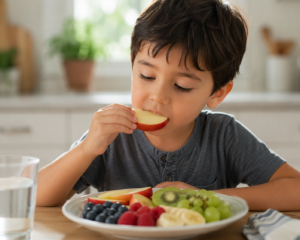 Research shows that children who practice mindful eating are more likely to:
- Recognize hunger and fullness cues, reducing the risk of overeating
- Develop a positive relationship with food, without guilt or shame
- Focus on the present moment, which can improve emotional regulation
- Make healthier food choices and appreciate a variety of tastes
Mindful eating can also reduce stress-related eating and emotional responses to food, which is particularly important as children face social pressures and distractions.
Strategies to Encourage Mindful Eating
1. Model Mindful Eating Yourself
Children learn through observation. When parents eat slowly, savor each bite, and limit distractions like phones or TV, children are more likely to mimic this behavior. For example, during breakfast, narrate your experience: “This orange is so juicy and sweet. I love the tangy flavor.” This invites children to focus on the sensory aspects of food.
2. Eliminate Distractions
Turn off screens, including the TV and tablets, and minimize other distractions during meals. A calm environment helps children focus on the food and internal hunger signals. You can create a designated eating space, like a kitchen or dining table, free from toys and electronic devices.
3. Encourage All Senses
Invite children to notice how food looks, smells, tastes, feels, and even sounds. Ask questions like:
- “What does this fruit feel like when you bite it?”
- “Can you describe the taste of this vegetable?”
- “What color variations do you see on your plate?”
Engaging multiple senses makes eating more intentional and enjoyable. It also helps children explore new foods without pressure.
4. Teach Hunger and Fullness Awareness
Help children recognize physical cues for hunger and fullness. Encourage them to ask themselves:
- “Am I starting to feel full?”
- “Do I need another bite or am I satisfied?”
Over time, children will learn to listen to their bodies, rather than eating based on external cues or emotions. You can also use visual cues like a half-filled plate to guide portion awareness.
5. Practice “One Bite at a Time”
Encourage children to take small bites and chew slowly. Count the number of chews or take deep breaths between bites. This slows the pace of eating and gives the brain time to register fullness. It also improves digestion and allows children to fully taste each component of their meal.
Creating a Mindful Mealtime Routine
Establishing a routine helps children anticipate and adapt to mindful eating habits. Consider the following:
- Set consistent meal and snack times.
- Include a short moment before eating, like expressing gratitude or noticing the aroma of the food.
- Engage children in meal preparation, allowing them to observe and participate in cooking.
Preparing meals together, like chopping vegetables or assembling fruit plates, can foster awareness of ingredients and appreciation for food, as highlighted in family mealtime routines.
Handling Resistance and Picky Eating
Some children may resist slowing down or trying new foods. Mindful eating emphasizes curiosity, not compliance. Encourage exploration without pressure:
- Offer small portions of new foods alongside familiar favorites.
- Celebrate tasting, even if the child does not like it.
- Use playful descriptions for textures and flavors to spark interest.
This approach reduces stress around meals and encourages positive associations with food.
Mindful Eating Activities for Kids
- Fruit Tasting Game: Blindfold children and let them taste different fruits, describing the flavor, texture, and smell.
- Texture Exploration: Offer foods with varying textures and encourage children to feel, bite, and compare.
- Slow Bite Challenge: Challenge kids to chew a certain number of times before swallowing.
- Colorful Plate Mindfulness: Create a plate with five different colors and ask children to notice each one before eating.
Benefits Beyond Food
 Practicing mindful eating has broader benefits, including improved focus, emotional awareness, and patience. Children learn to be present and attentive, which can translate to other areas of life, such as reading, homework, and social interactions. Mindful eating can also reduce family mealtime conflicts and create a more peaceful environment.
Integrating Mindful Eating with Family Activities
Combine mindful eating with family rituals. For example:
- Start meals with a brief reflection or gratitude moment.
- Ask children to set the table or serve themselves to practice attention and patience.
- Encourage conversation about flavors and textures rather than distractions.
Recommended Resources for Parents
For more guidance, parents can consult reputable sources such as:
- Academy of Nutrition and Dietetics – Mindful Eating
- British Nutrition Foundation – Mindful Eating for Kids
Conclusion
Teaching children mindful eating habits is an investment in their lifelong health and well-being. By slowing down, focusing on food, and listening to their bodies, kids develop a healthier relationship with food, improved self-awareness, and valuable life skills. Start with small steps—model mindful eating, remove distractions, and engage the senses—and gradually build routines that make meals enjoyable, calm, and intentional.
With consistency and patience, mindful eating can become a natural and rewarding habit for children, fostering balance and wellness for the whole family.